
Deuel County Civil Docket Searches
The free public doorway is the Nebraska JUSTICE one-time case search. It returns public county and district court case information, Deuel included. Enter the party name and pick Individual or Entity with care. The filters can trim a long result list. They cover county, court type, case year, case type, subtype, judge, and attorney. Going broad often beats over-narrowing before you know the likely court.
Know what you are buying. Each search is a one-time paid transaction, even when it returns nothing. Results stay viewable for three days with up to 30 public records. Match the caption, court, case number, and party role. Do this before opening any case detail. Document images are not part of this service. For copies, certified records, transcripts, or restricted-file questions, go through the Deuel clerk. A result row is never the full file.
- Open JUSTICE and enter the party or entity name.
- Add Deuel County and a likely court type if the initial results need narrowing.
- Match the caption, case number, court, and party role.
- Open the case detail and read the Case Summary and Register of Actions.
- Ask the clerk for an official copy when the screen is not enough.
Deuel Civil Court Levels
Deuel County runs two civil courts with one shared clerk. County Court and District Court each keep their own civil docket. The Deuel County Court directory and the Deuel District Court directory list them separately. But the Deuel County combined office page shows the single local office behind both. County Court takes civil matters up to $70,000 from July 1, 2025 through June 30, 2030. Rule and statutory exceptions apply. District Court holds general civil jurisdiction. So if you know only that a Deuel civil filing exists, check both levels.
One caution about the county site. Its older civil and small-claims figures are still posted there. The current limit comes from Nebraska Rule 6-1462, not that stale local summary. Some special case types also go through County Court. Probate, guardianship, conservatorship, adoption, and eminent-domain cases pass through it. Their captions and privacy treatment can look different from a standard civil dispute.
Need the dollar figure for county-court civil filings today? The county-court civil-jurisdiction rule on the official rules page shows the controlling threshold.
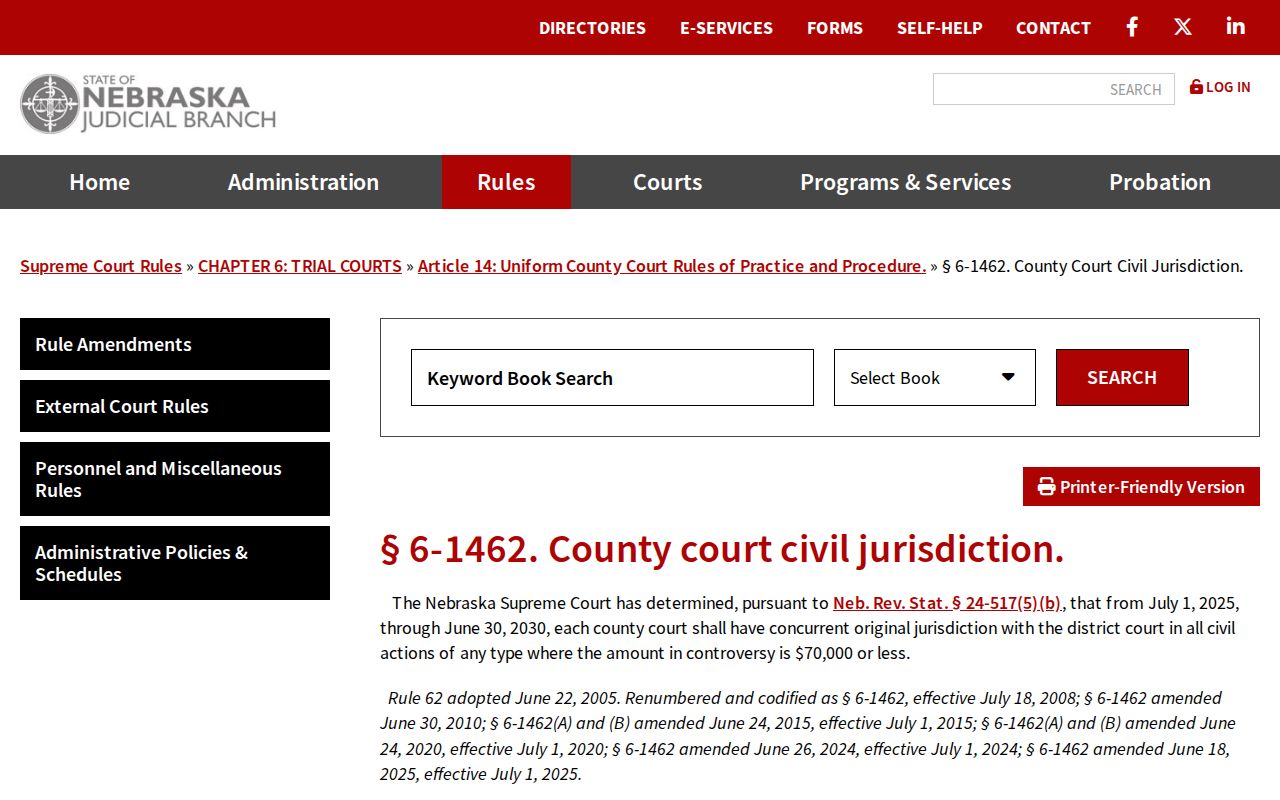
A jurisdiction rule can hint at the right level. Only the Deuel case record confirms where the filing was actually made.
Civil Dockets: What They Show
Nebraska's official case-detail demonstration shows a civil docket's contents. They include court, case ID, caption, presiding judge, classification, filed and closed dates, disposition, parties, attorneys, judgment information, court costs, financial activity, and a reverse-chronological Register of Actions. It is a demonstration schema, not a Deuel case. Public display and image access vary by record and access product.
A closed label does not mean the story ends. Satisfaction, garnishment, a continuing-lien order, or other post-judgment events can appear. They may land after the initial judgment. Treat any financial field as a court-account figure, not a current payoff statement. Always pair the event date and details with the short entry label.
| Case Summary | Court, case number, caption, classification, judge, status, filing or closing date, and disposition when public. |
|---|---|
| Parties and attorneys | Role, status, and associated attorney details where public and permitted. |
| Register of Actions | Reverse-chronological dated entries, such as complaint, summons, return, motion, order, or satisfaction. |
| Judgment information | Principal, fees, costs, interest, creditor or debtor fields, and a satisfaction date where shown. |
| Image ID | A reference to an eligible filing image, not a guarantee that an image is public or unredacted. |
Deuel Civil Register Order
Register entries run newest first in the Nebraska civil demonstration. The top line is not always the opening filing. It may be a satisfaction, an order, or a court-staff note. Start at the earliest commencement entries. Read forward through service, motions, orders, and later collection activity to rebuild the sequence.
Common labels include the following. Complaint/Praecipe, Summons Issued, Return-Summons, Motion-Default Judgment, Order-Default Judgment, Garnishment Summons Issued, Interrogatories, Release of Garnishment, and Satisfaction all appear. These are observed official schema labels, not a guaranteed Deuel abbreviation dictionary. Details, service method, and served date often say more than the label alone.
- Complaint or praecipe
- An early filing that begins or requests an action in the civil case.
- Return of summons
- A register item about service or return, which should be read with its details and date.
- Satisfaction
- An entry that an obligation was satisfied; it is distinct from the original judgment.
What Cases Fill the Civil Docket
A Deuel civil docket search reaches beyond ordinary disputes. County-court probate, guardianship, conservatorship, adoption, and eminent-domain categories show up too. Use the name and court-type filters. A petitioner, respondent, estate, guardian, or entity may replace the usual plaintiff-and-defendant pattern. Privacy rules or sealing can change what is public.
The Judicial Branch offers a separate small-claims resource. It does not state the current dollar ceiling. The $3,500 figure on the county site is an older number. It should not be treated as current. When the amount and case category determine where a Deuel claim belongs, ask the clerk or check current law.
- General civil filings in County Court or District Court, depending on jurisdiction and case type.
- Probate, estate, guardianship, and conservatorship matters in the county-court structure.
- Adoption and other statutory county-court matters with their own access rules.
- Small-claims matters, subject to current law and court procedure.
The official small-claims resource provides the statewide self-help entry point.
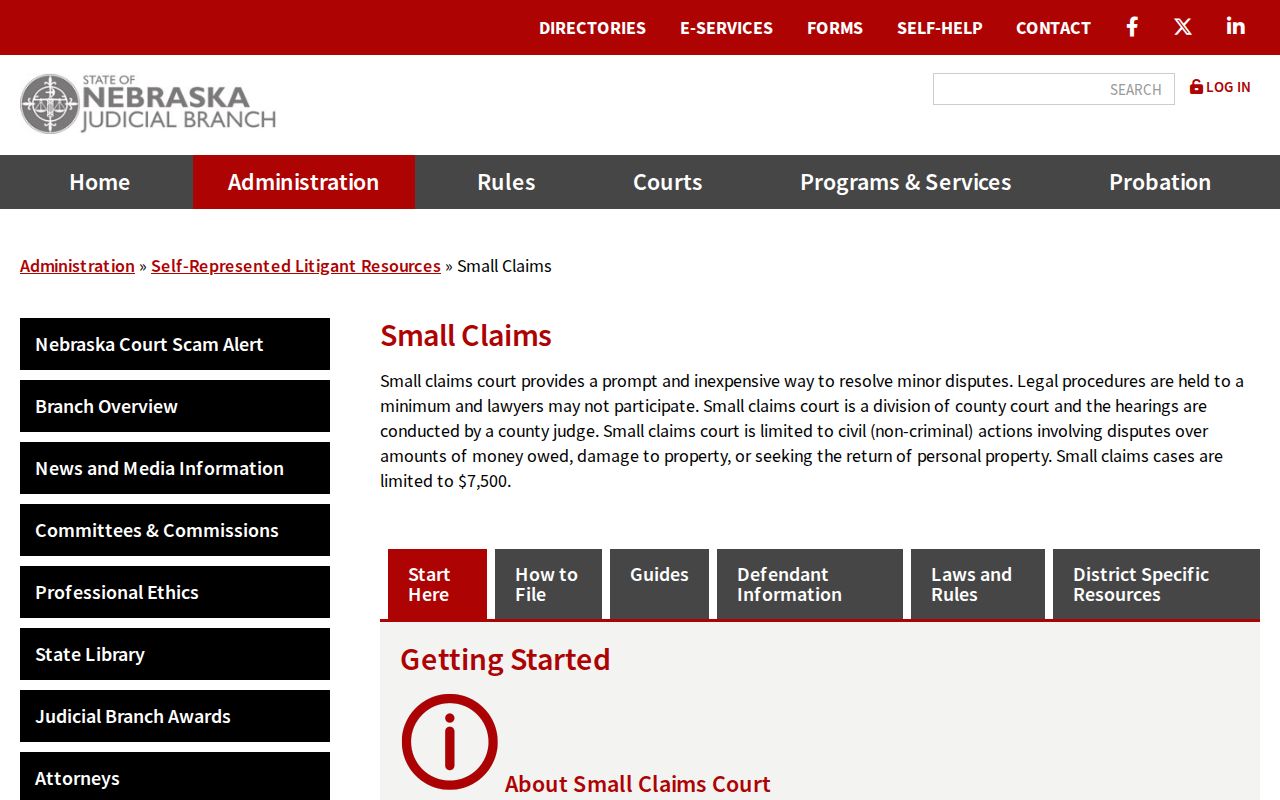
Self-help pages explain a process in general terms. The Deuel docket and the clerk identify the actual local case record.
Deuel Civil Judgment Events
On a Deuel civil docket, judgment events mean different things. A motion for default judgment is only a request. The order or judgment that follows is the court actually acting on it. A satisfaction shows the debt was later paid off. Garnishment can bring several entries with it. These include a summons, interrogatories, a return, and a continuing-lien order. Reading any one entry as a stand-in for the order itself is a mistake. Check the order and its dates.
Public case detail may break out several figures. These cover principal, attorney fees, post-judgment costs, default interest, receipts, and disbursements. Those figures help you follow court-account activity. Still, they will not always tell you whether money is due on a given day. The unified Deuel clerk office is the place to call. It can also say what copies the court provides. The Judicial Branch filing-fee and court-cost schedule publishes the current statewide fee amounts.
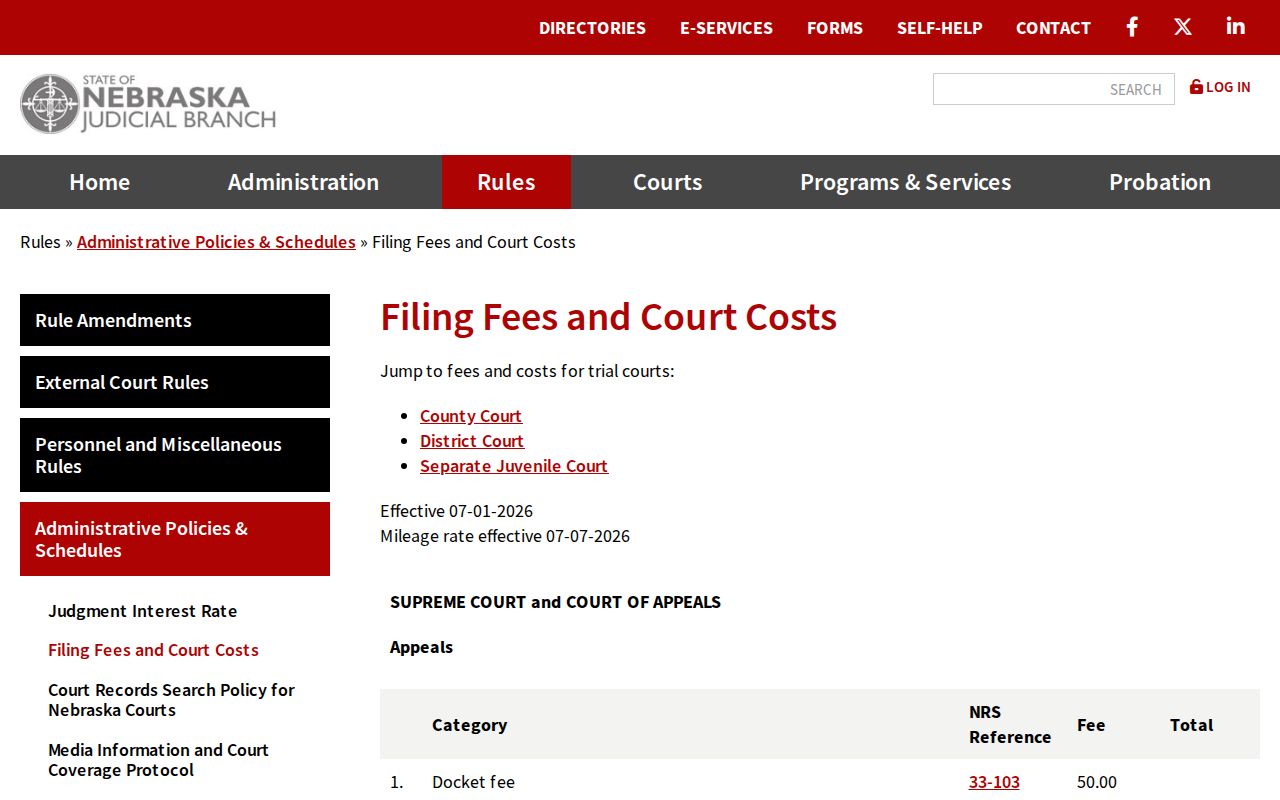
Before you send anything in, confirm copy, certification, mailing, and deposit details with the Deuel clerk.
Hearings on the Civil Docket
Use the Nebraska Multi-Court Case Calendar to look for a current or future Deuel civil setting. Select County Court or District Court, select Deuel, and search by date or last name. The calendar can display the case number, caption, date, time, location, and an available event or judge label. It is separate from the Register of Actions.
A no-result screen does not prove that no hearing exists. The official calendar says its information may be incomplete or untimely, and date searching is limited to current and future dates. For an old setting, read the register. For an important upcoming setting, compare the calendar result to the case detail and confirm it with the clerk. The fuller date-search procedure is available through the Deuel County Court Schedule.
Deuel District Civil Scheduling
District 12 covers Deuel along with neighboring counties. A judge's home court is not a fixed Deuel assignment. Derek C. Weimer sits as district judge. He is not permanently stationed in Deuel. For any case, trust the current record and the clerk. Assumptions about assignments can mislead.
Rule 12-12 of District 12 governs scheduling. It gives the assigned district judge control of trial-docket calling and the trial, pretrial, and motion-day calendar. A civil case at issue must be tried in the current or next term unless the rule allows a continuance. This local framework is why a calendar view can shift. The latest setting, not an older notice, should guide your plans. The official district-judge directory page lists the District 12 judicial role.
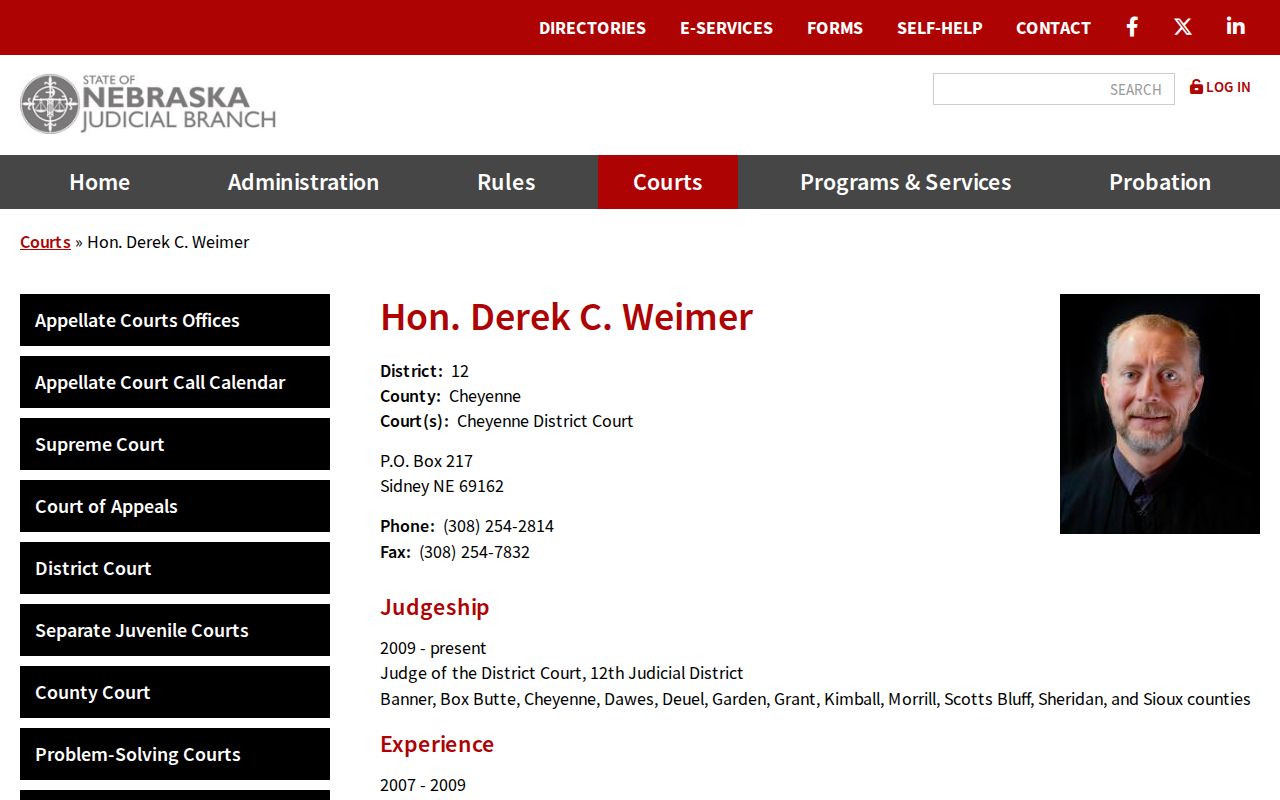
The directory gives the district picture; the Deuel clerk and the current calendar confirm what applies to your case.
Who Can See Civil Dockets
Nebraska Supreme Court Rule 1-805 opens many electronic court categories to the public unless something restricts them. Some categories stay restricted. That access can reach party indexes, case summaries, registers, calendars, eligible filing images, and summary judgments or orders. The official electronic-access rule governs this. It does not make everything public.
In Deuel, requests can run through JUSTICE, the courthouse public terminal, or Joan Hansen's unified Clerk Magistrate / Clerk of District Court office. Bring the court, the case number or a complete party name, the year, the case type, and the document you want. You can also ask in writing. A defined record request then falls under the Nebraska Public Records Act and the court-records policy. For an official copy, fees can apply. Ask about the current invoice, per-page copying, certification, mailing, and any deposit the clerk requires.
Record-access rule: A public docket entry may lead to a public redacted document, a restricted document, or no available image. The clerk controls copies and certification.
Protected Deuel Civil Information
County civil records get protection from Nebraska Rule 6-1464. It covers birth dates, gender, Social Security numbers, financial-account numbers, and similar personal or financial data. Rule 6-1521 is the district-court counterpart. The system relies on confidential appendices, sealed originals, and public redacted versions. Never use a public docket to repeat data a rule says must stay withheld or redacted.
A record may be sealed. Part of a document may be protected. Ordinary JUSTICE search may simply not return it in those cases. Ask the clerk for the correct court process. A transcript is its own request. The county-court route needs case and hearing information. A nonparty must get judge approval. Think of the public docket as an index to procedure. It is not a free copy of every civil file. The official civil-information protection rule spells out the county-court safeguards.
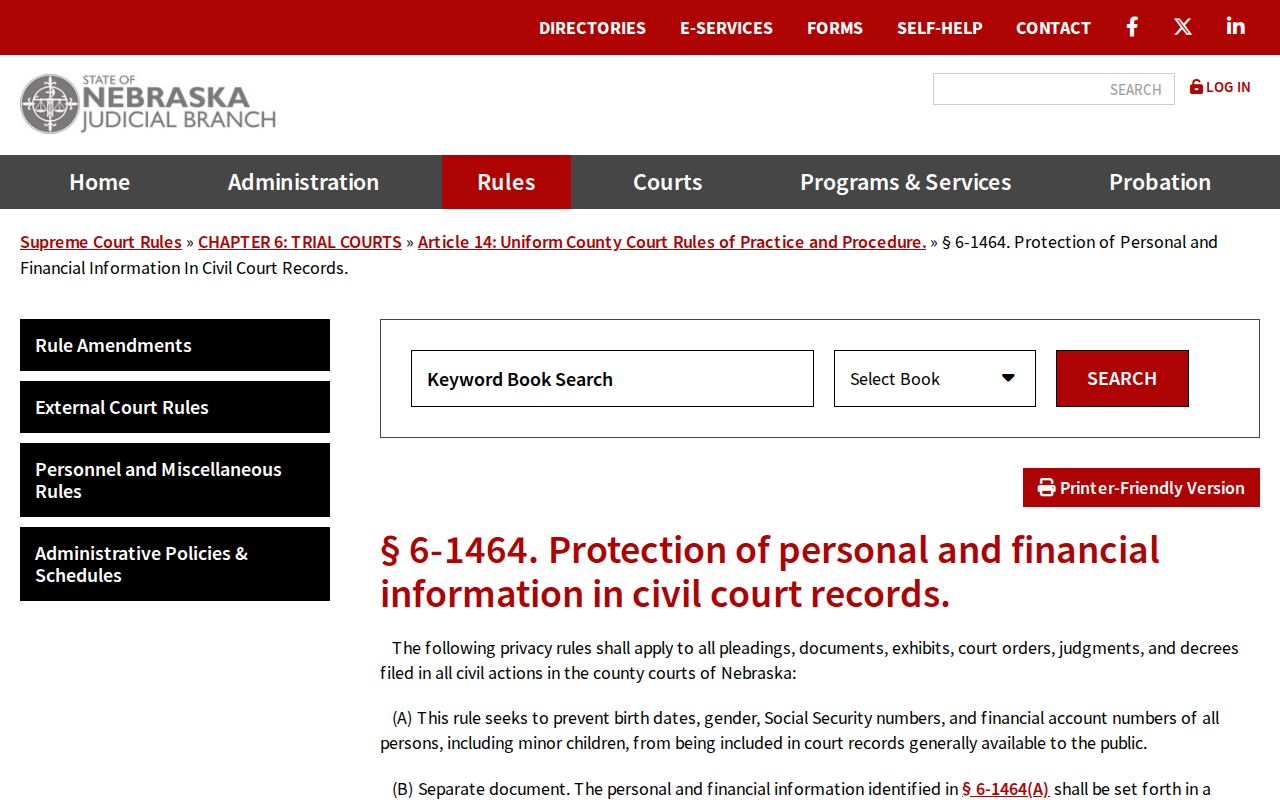
Those safeguards are why a public Deuel civil docket can list a procedural event while leaving the details of the filing out of view.